





The Juan Castillo repository includes the digitized work of the artist, made from 1978 to today. His work is presented from an inclusive and robust perspective through collaboration with other artists, curators and friends. The objective is to explore and contextualize the work of Juan Castillo through a system of relationships, creating an interactive and enriching experience for the public.
The repository has two built-in layers to provide a complete experience for your visitors. The first is designed to generate direct interaction with the public, offering an overview of the artist’s work, as well as a variety of resources to make associations between different methodologies of action. The second, on the other hand, is intended for research and was designed to provide detailed access to the artist’s documentation and archive.
This site uses archival organization techniques such as cataloging and indexing to ensure that the material is available under the most comprehensive archival and heritage collection standards.
The creation of the Juan Castillo Repository has been underway since 2022, and is financed by the National Fund for Cultural Development and the Arts, Line of Visual Arts, Research modality, Call 2022. The project has the support of the Museum of Memory and Human Rights and the Extension Center of the Ministry of Culture, Arts and Heritage CENTEX.
Set of actions, themes and efforts that make up a work, processes and methodologies that end up in the creation of exhibitions, books or catalogs and that extend over time.
These are groups, or articulated sets, of objects, images and texts of different sorts, formats and supports that are not autonomous but rather form a constitutive part of the activities, processes and products, that make up, or are related to, some project, occupation and/or particular location of Juan Castillo’s trajectory.
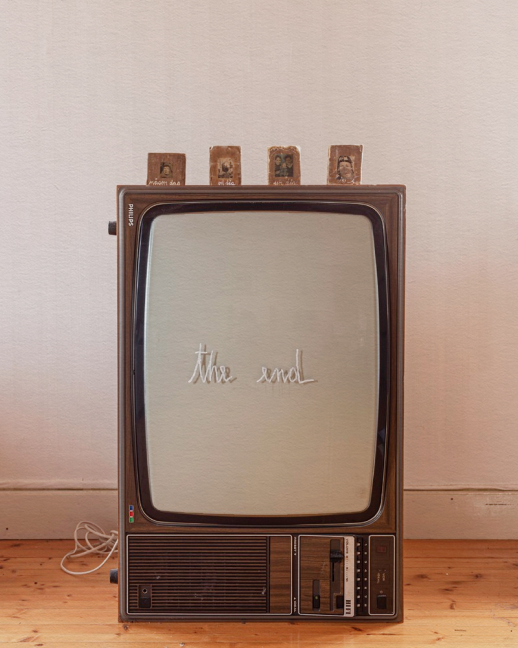
Set of methodologies, strategies and techniques that Juan Castillo has carried out throughout his career, which are systematically present in his pieces, projects and occupations. Among these we have identified: actions, which imply the use of the present body (of the artist or others); interviews, generated through research with various communities; drawings and/or calligraphic writing that the artist inserts in his pieces or on the walls of museums, galleries, vacant lots or on the highway; paintings, which involve pictorial exercises applied directly to the support using tea, coffee and/or oil pigment, among others, and/or treatments such as glazes or impastos using tar and/or beeswax, among others; objects, produced with materials such as plaster, concrete or wax, empty on wooden or aluminum frames or recycled containers such as television monitors, sardine cans, among others; videos, which record creations whose nature is eminently ephemeral, that is, that they were produced to be destroyed through the use of fire, or that record the interviews generated in their territorial investigations.
Category devised by the artist, which consists of meeting the exhibition space and occupying it, addressing it with the work, beyond an installation, if not unfolding in the place with situated artistic work.
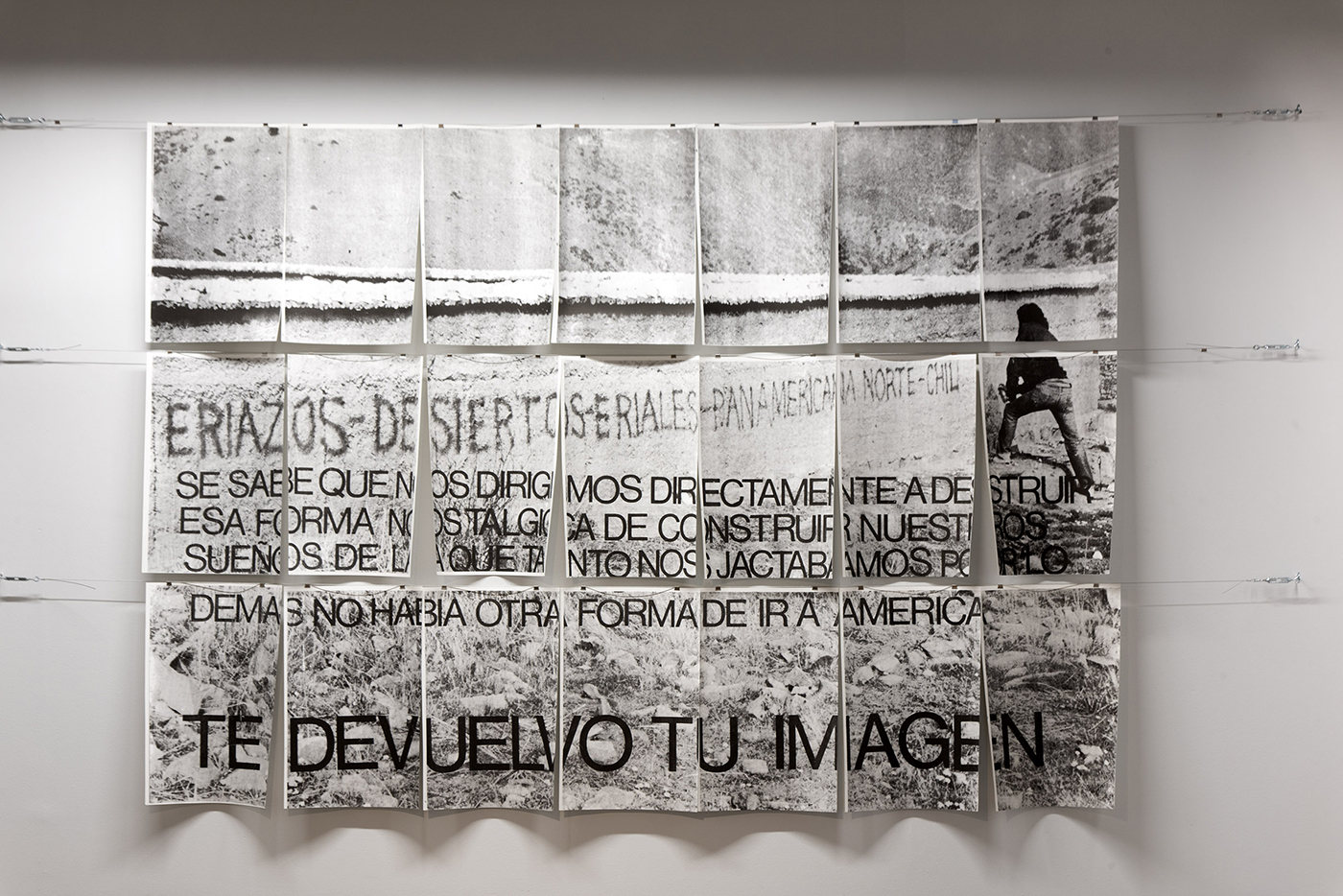
TE DEVUELVO TU IMAGEN consists of a project developed in several stages that includes various operations and occupations. The first part entitled "Intervención en el eriazo", consisted of a series of actions and interventions on the walls of vacant lots in the cities of Valparaíso and Santiago with the phrase "I project from marginality to be able to materialize a reality that lives repressed in my head" (Szmulewicz, 2015, 212). Recording these actions, Castillo made a short film (1979-80, 8 min) in collaboration with Carlos Baeza and Ignacio Agüero, in his editing he mixes scenes from a neighborhood soccer game (pichanga) with the images of peripherals industry landscapes.
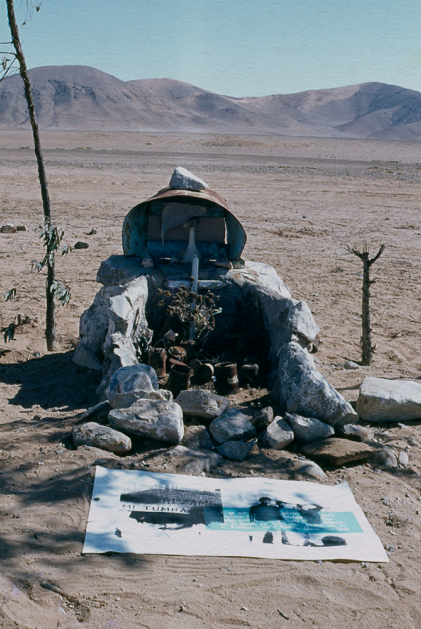
The records were exhibited between December 10th -20th, 1979 at the Centro Imagen Gallery, while also using showcases of the shops in the capital city, and the School of Arts of the Catholic University (La Bicicleta N 6, 1980, 7). “The Gallery was completely covered by wrapping paper and a sheet was placed in the center where he projected the interventions done in the wastelands” (Szmulewicz, 2015, 212). Subsequently, following the same structure, Castillo intervened on the walls of vacant lots with phrases such as “Señalando nuestros márgenes”, “BARREN-DESERT-WASTELAND”, among others, once again recording the process of the action. He expanded one of those registers and reproduced them in a modular way in 50 screen prints that he later installed on the walls of vacant lots located on the Américo Vespucio ring road in Santiago, covering a surface area of 380 x 240 cm (Álvarez, 1998, 17). Later, Castillo created and reproduced a two-color photo-screen print, based on a childhood portrait, rescued from the family album, where the artist appears together with his two brothers, on which he wrote "It’s well known that we are headed directly towards destroying that nostalgic way of building our dreams that we had bragged so much about, there was no other way to go back to America otherwise. I give you back your image./Pray to me in my grave" (Álvarez, 1998, 16).
Castillo installed these screenprints on the “animitas” (tiny sanctuaries made in places where someone has died so as to worship) that he found along the Panamericana Norte highway on a trip he made with Lotty Rosenfeld and Ignacio Agüero from Taltal to Santiago. In the last stage, entitled "Te devuelvo tu imagen", as a presentation of the stages and processes of the project, Castillo carried out an occupation in the living room of his house, in 1981, using a television monitor and a video player, spotlights, bundles of screenprints that attendees could take, a bucket of paint, among other elements that made up the installation. Years later Castillo has continued this project carrying out occupations in various cultural institutions such as the Gabriela Mistral Gallery in Santiago in 1998.
FRANKENSTEIN is a multi-stage project comprising various operations and occupancies carried out between 1995 and 1997. The first occupancy was in an old abandoned mill outside of Stockholm, Sweden. Castillo used the architecture of the venue to design an installation that incorporated television monitors and small assemblages made up of cement castings in wooden frames on which he composed a collage image of various faces found in the press or on flyers or other forms, intervening on them with graphite and acrylic, "to which he has bruised, torn and blotted with paint" (Álvarez, 1998, 22).
Castillo made a series of these collage images composed from fragments of different faces, of various ethnic groups, which he photographed in slide format that he used to carry out a series of projections in the public space. Projecting architecture such as the Pont des Arts bridge or the waters of the Seine River from a moving vehicle, whether on the pavement of the road, Castillo intervened in the cities of Paris, Malmö, Lund and Seoul. He also projected on the façade of his workshop in Stockholm and participated with the project in the III Biennial of Video and Electronic Arts at the Museum of Contemporary Art in Santiago, Chile, in 1997.
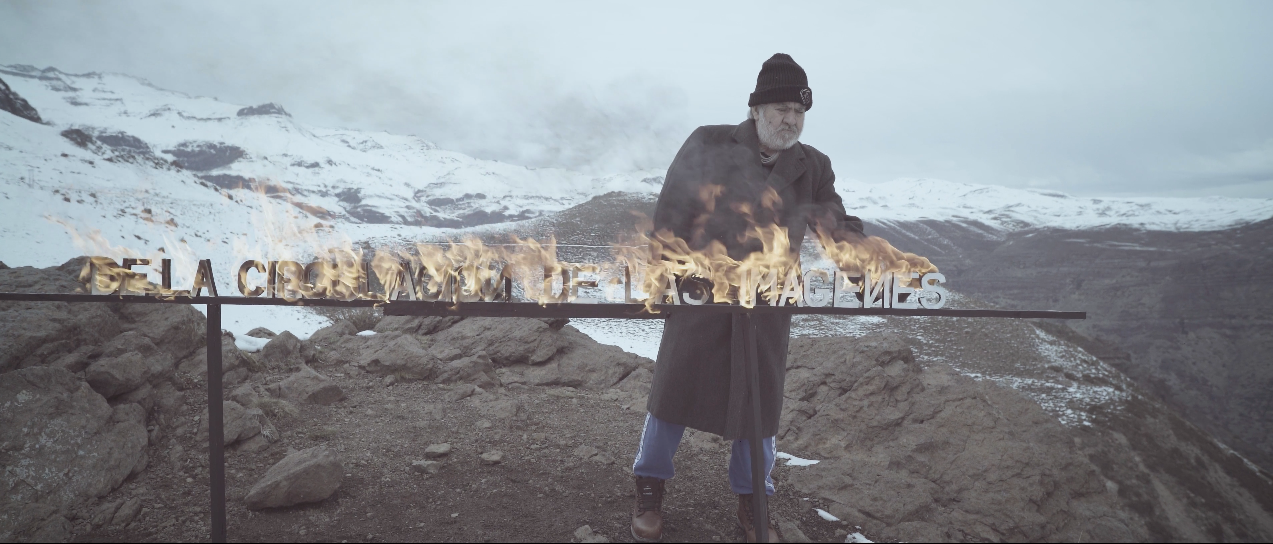
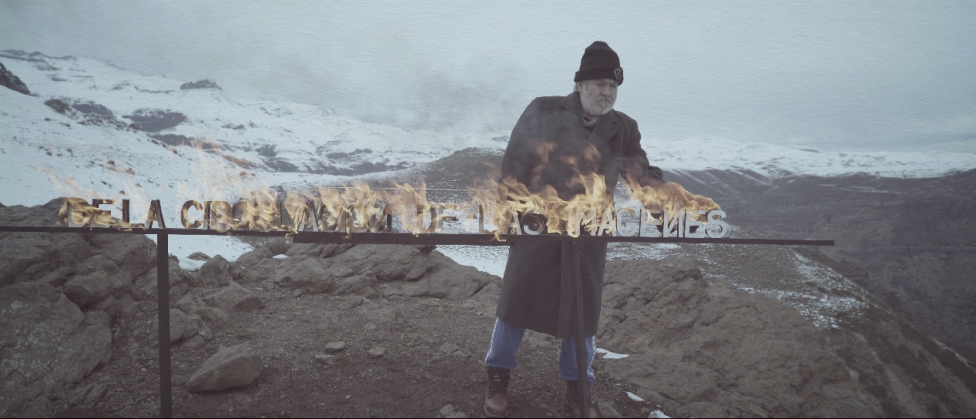
DE LA CIRCULACIÓN DE LAS IMÁGENES is a project that is developed with different elements, occupations and operations. The first occupation was carried out in 2017 at Galería Tajamar, in 2019 at Casa de la Cultura in Santa María de Guía, Gran Canaria and as an action in the Andes mountain range for the mini-documentary series Gabinete, directed by Felipe Ríos.
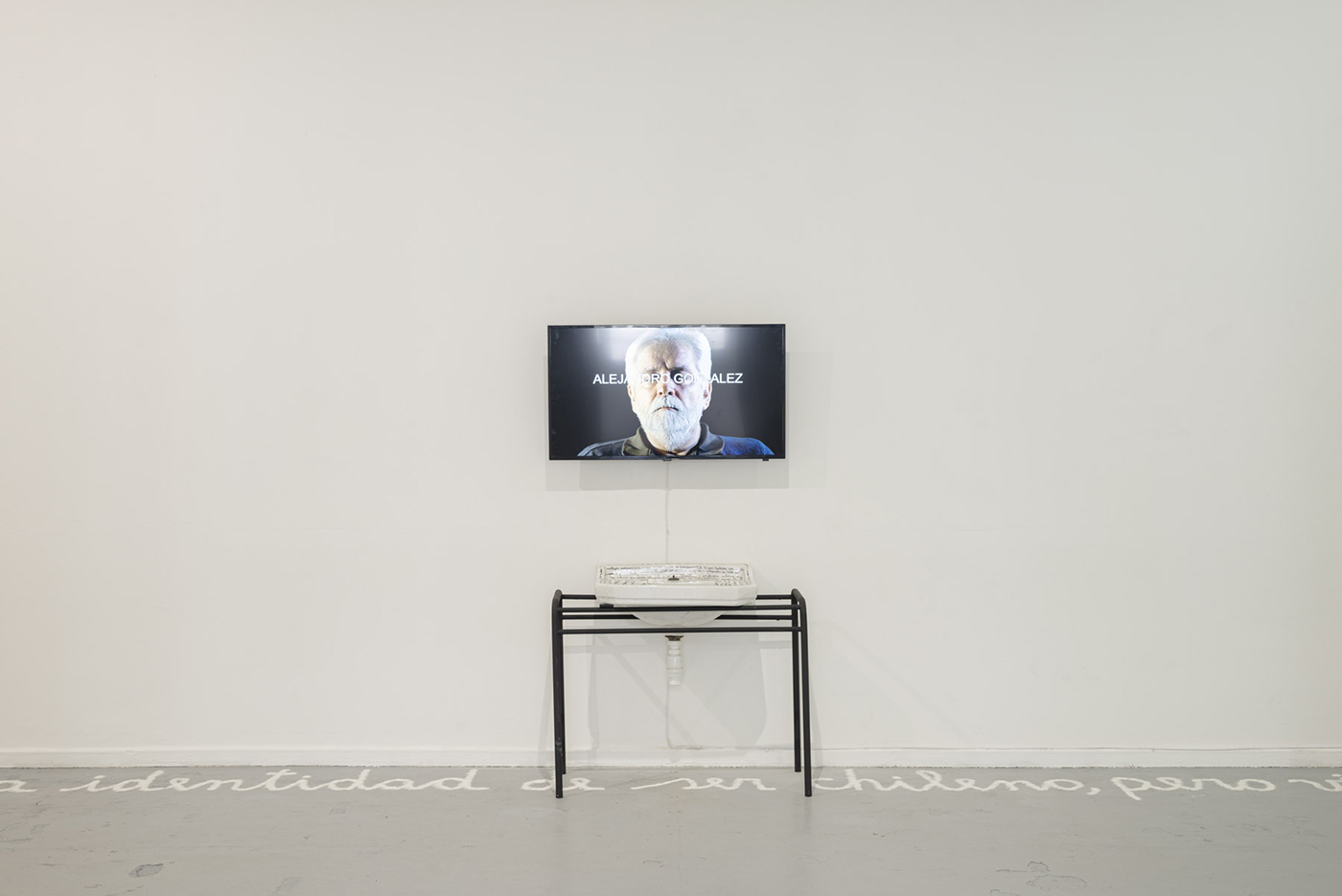
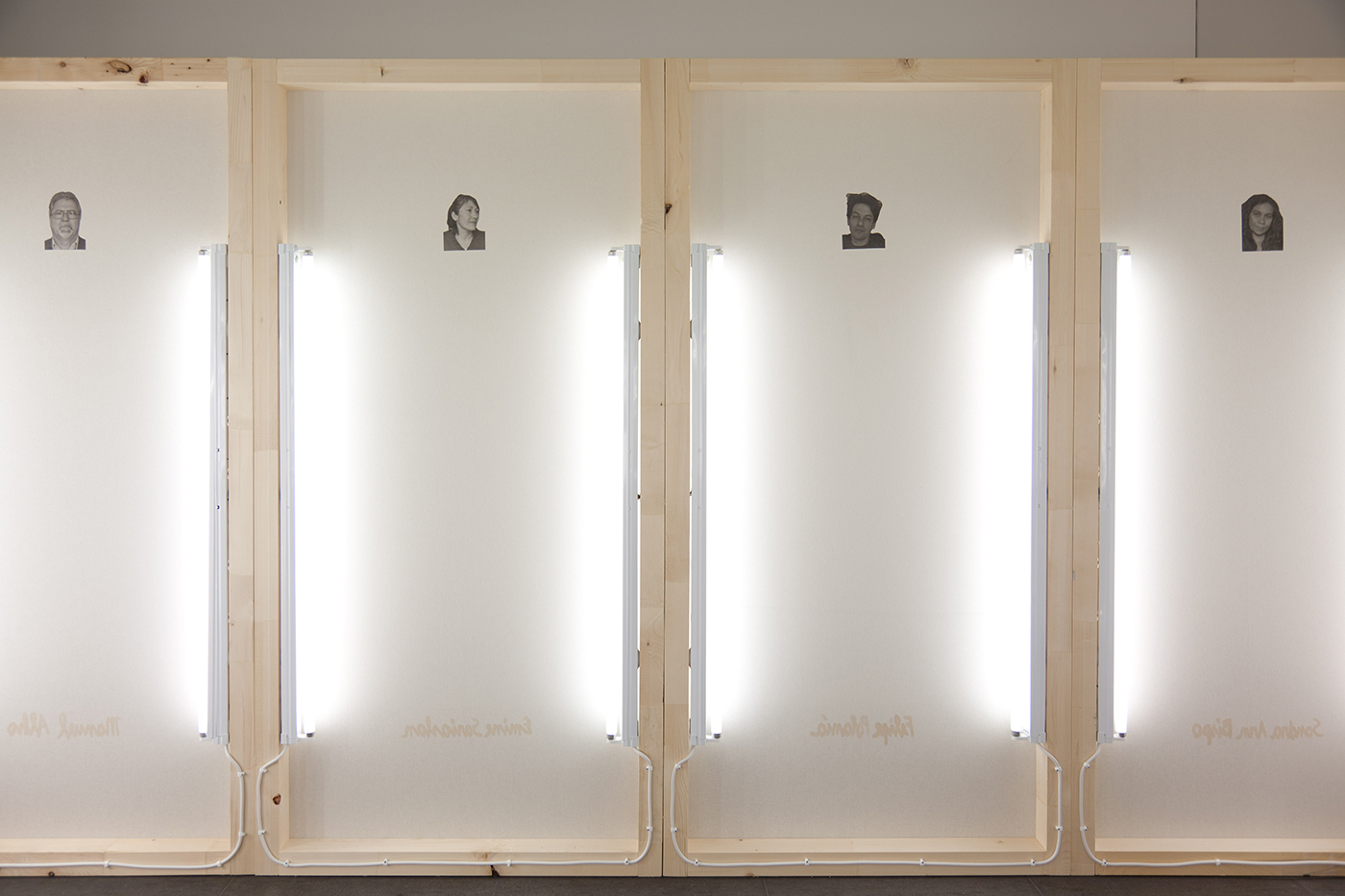
CAMPOS DE LUZ is a project that includes various operations and occupations carried out between 2006 and 2011. The title refers to a project carried out in 1982 by the Al Margen collective, made up of Ximena Prieto and Juan Castillo, nevertheless, their operations and occupancy spaces differ greatly. On this occasion, Castillo made an audiovisual record of various testimonies from migrants, whom he invited to relate the feelings of non-belonging or "dislocation" that they experience in front of the place they inhabit. Subsequently, the artist edited a micro-documentary titled Champs de Lumière (36 min) in which the faces of the protagonists “appear in the foreground” (Rojas, 2011, 99) in the manner of a video-portrait. Castillo continued these operations to develop them within the framework of the international project titled Dislocation, curated by Ingrid Wildi Merino and Kathleen Bühler, in which he participated by investigating the community of La Victoria, located in the Pedro Aguirre Cerda commune, documenting a series of interviews with its inhabitants, questioning them about their views on the notion of “dislocation”. Subsequently, replicating the operations of his MINIMAL BARROCO project, the artist created an edition of the audiovisual records of the interviews, a production carried out jointly with members of Señal 3, a community television channel in the town, which he projected on the back of the an adapted truck that circulated through various sectors of Santiago. The recordings of the truck traveling through the city were broadcast on the programming of Señal 3 de La Victoria as a way of disseminating the debate programs that were broadcast on this television medium every Friday, for a month, within the framework of the Dislocation curatorial project. These programs had the participation of artists and residents who discussed the concept of "dislocation."
To present these materials, Castillo carried out an occupation of the exterior spaces of the offices of the community television channel Señal 3. The artist reproduced screen-printed portraits of the interviewees and fixed them in light boxes that he placed on the façade of the establishment.
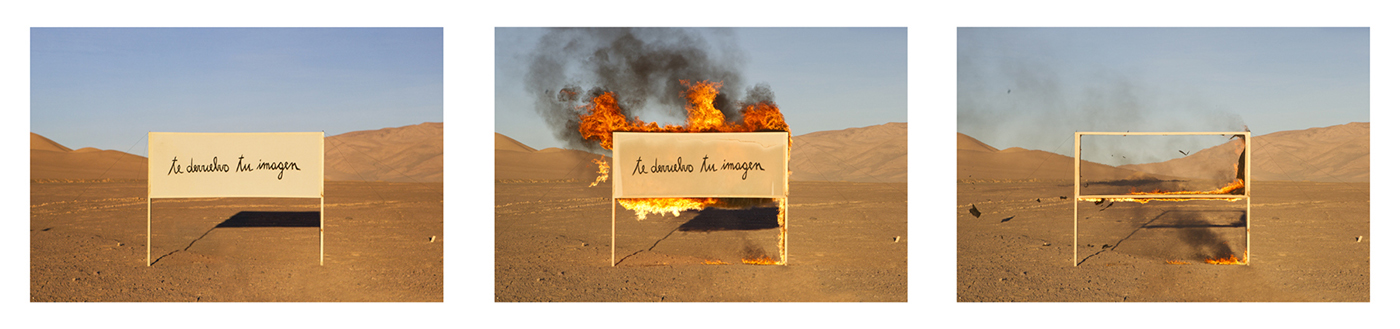
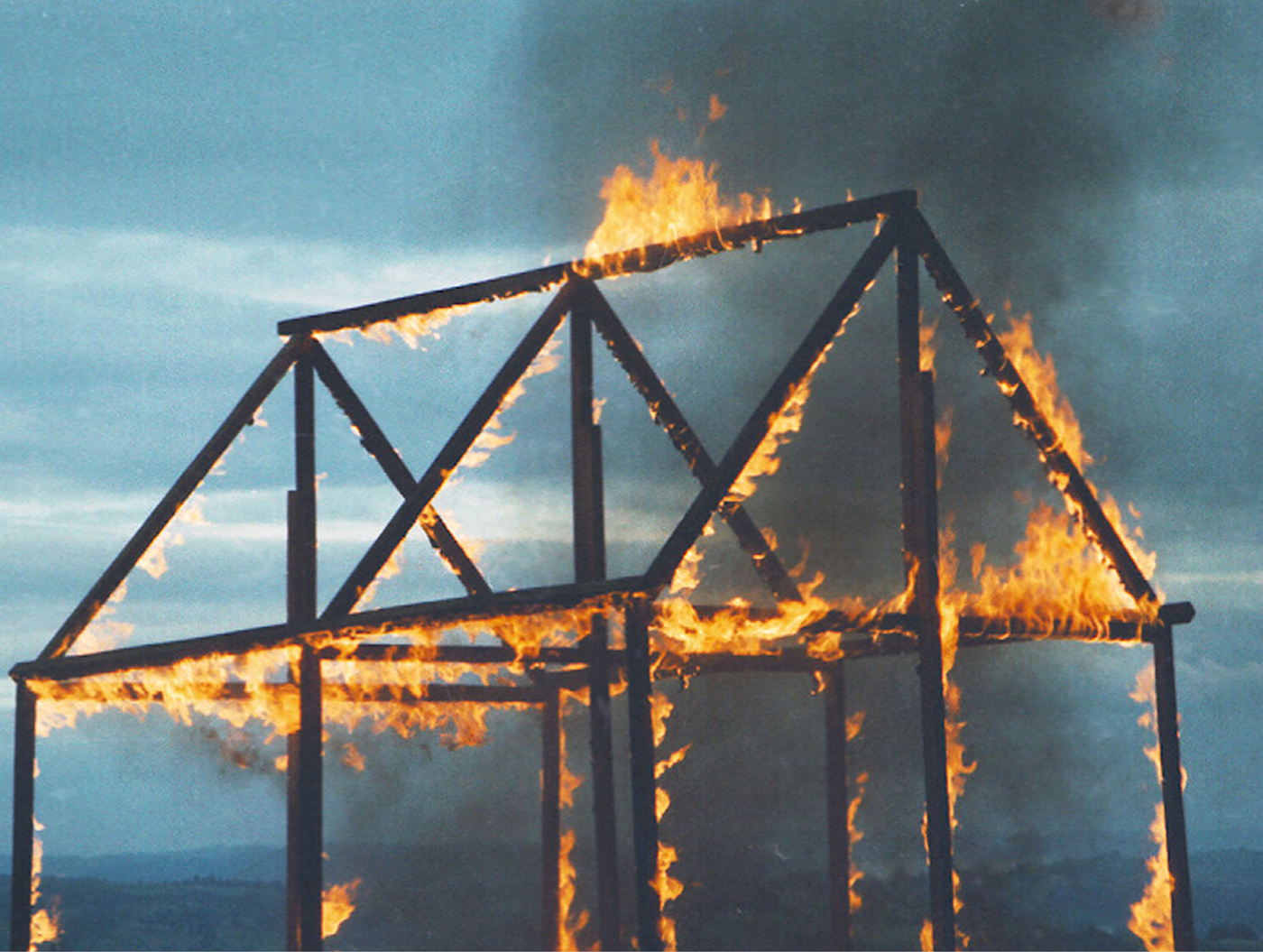
RITOS DE PASO is a project that includes various operations and occupations developed between 2013 and 2015. With the collaboration of René Dávila (audiovisual production), Castillo carried out a series of actions and interventions in the Atacama desert and on the Island of Chiloé , which he recorded audio visually and photographically. The actions consisted of locating a structure similar to an advertisement in the middle of the landscapes of these extreme geographies, the desert in the north of the country, the coasts and the sea horizon on the southern island. “Typical Chilean landscape postcards. Tourism icons'' (Santos, 2013, 2). The structure contained the phrase "I give you back your image" handwritten on cloth, which was later set on fire, recording the process of combustion and destruction of the object. In both locations, the artist, in turn, recorded interviews with residents.
Castillo presented the project through various occupations that included photographs, videos, and handwriting with tea pigment on the walls at D21 Galería de Arte (Santiago), at the Museo de Arte Moderno de Chiloé, MAM, (Castro) and at the Centro de Arte de Extension of the Faculty of Engineering and Architecture, Arturo Prat University (Iquique).
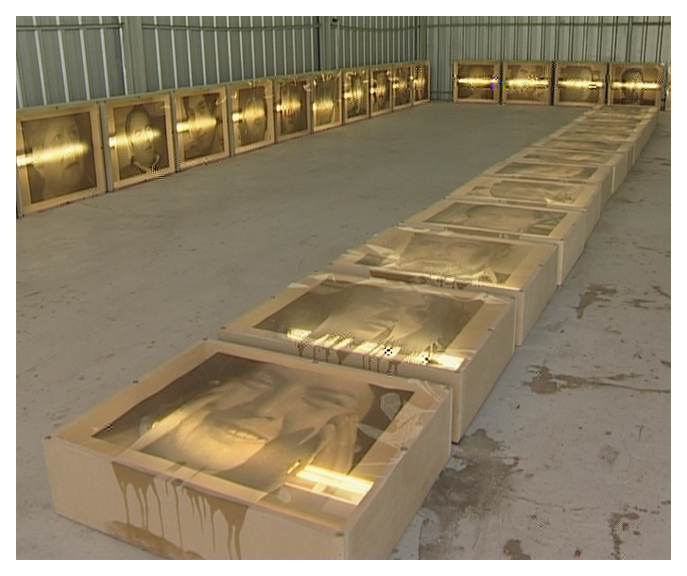
GEOMETRÍA Y MISTERIO DE BARRIO is a project that includes various operations and occupations carried out between 2000 and 2004. After a four-month residency at Galería Metropolitana, located in the Pedro Aguirre Cerda commune (Santiago, Chile), Castillo made a field research in the community establishing links with 40 residents of the sector from whom he requested authorization to take a portrait, a record of the facades and living rooms of their houses, and answer the question: "What is your most important dream?", recorded on video. Finally, he asked them for a “dear image” of any nature (photograph, illustration, banner, etc.). With this material, the artist carried out a series of public interventions in the neighborhood, fixing video captures and texts printed on paper on the pavement and on the walls of the neighborhood's architecture. He made an installation at the Metropolitan Gallery presenting the portraits printed in silkscreen on light boxes. Records of responses were reproduced on television monitors. In turn, Castillo made the projection of the testimonies in the skeleton of a large abandoned construction commonly known as "white elephant", which was an interrupted project of a hospital that would have been used for the whole southern area of Santiago, but couldn't be finished because of the the military coup in 1973, and the building was ultimately dismantled and abandoned.
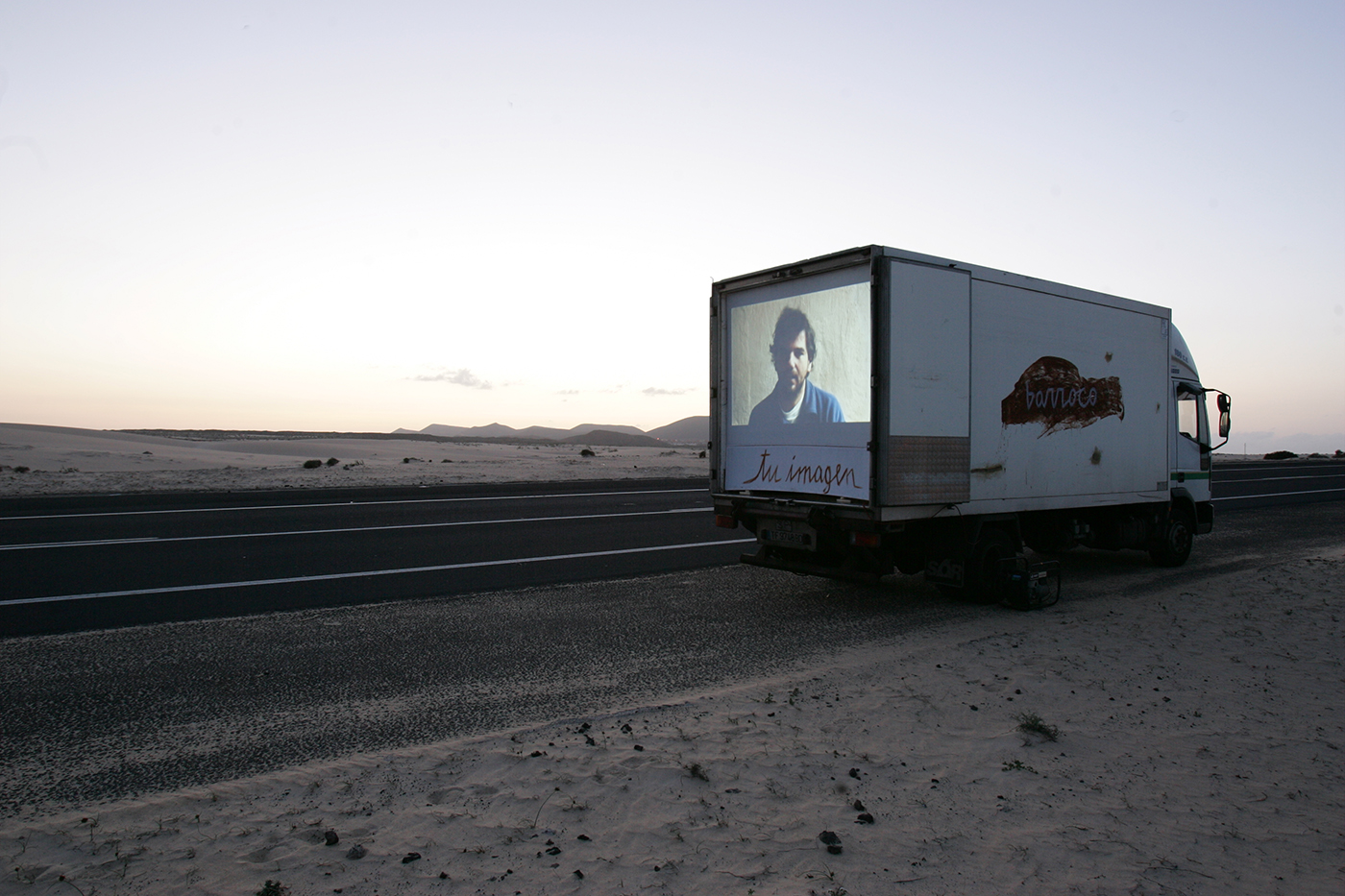
MINIMAL BARROCO is a project that includes various operations and occupations carried out between 2006 and 2011. Continuing the operations of GEOMETRÍA Y MISTERIO DE BARRIO, Castillo recorded the processes of interviews and interventions in four cities in different countries. In 2006, invited by the Manukau School of Visual Arts and the Art Council of New Zealand, to participate in the framework of the South Project, Australia, Castillo carried out field research in the town of Otara in the city of Auckland, New Zealand, inviting the inhabitants of a marginal sector to respond, in their mother tongues, to the question "What is art for you?". Subsequently, the artist modifies the back of a truck to project the responses recorded on video, which circulated from the peripheral town to the center of the city of Auckland ending its journey at the War Memorial Museum. This set of operations was replicated in the towns of Fuerteventura (Spain), Stockholm (Sweden), and Santiago and Valparaíso (Chile), occasionally incorporating the questions: "What is your most significant dream?" or "What is your most significant trip?" In each intervention, the truck circulated through the city, like a “mobile cube” (Minimal Barroco, 2009, 17), from sunset to midnight, visiting the most significant places in the city.
The materials from these field investigations have been presented on various occasions during the occupation of the Metropolitan Gallery (Santiago), Puntángeles Gallery (Valparaíso), within the framework of the Triennial of Chile 2009 curated by Gabriel Peluffo and Alberto Madrid, and in the international project Dislocación by the artist Ingrid Wildi (2010), among others.
Interventions have been carried out in the cities of Auckland, New Zealand, 2006; Stockholm, Sweden 2007; Fuerteventura, Spain 2007; Santiago Chile, 2008; Valparaíso within the context of the Triennial of Chile, 2009; Antofagasta Chile, within the project "Se Vende", which I carried out with artists from this city, 2009; Santiago de Chile, within the context of the project, "Dislocación", 2010.
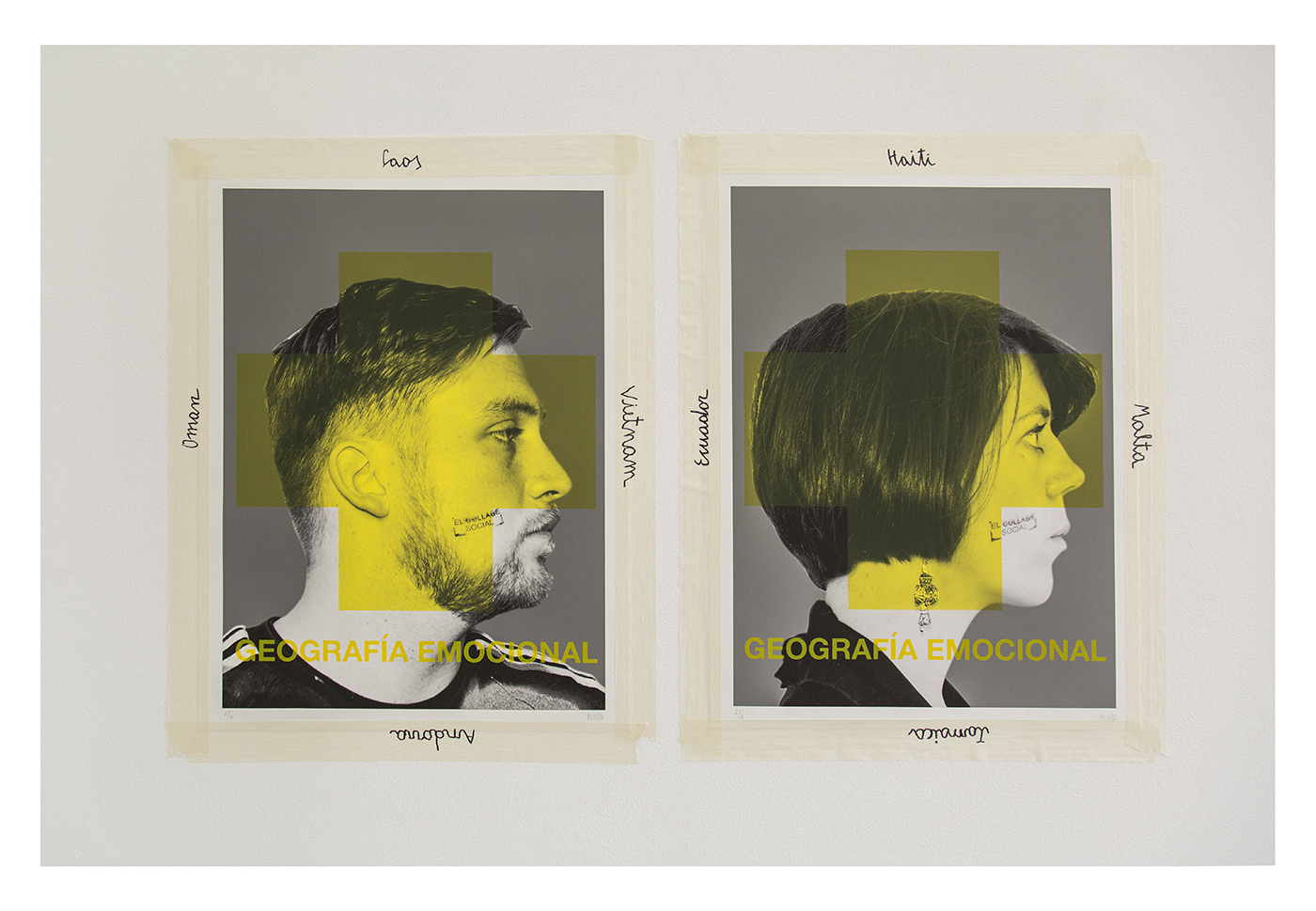
GEOMETRÍA EMOCIONAL is a project composed of various operations (screen printing, painting, photography, interventions in public space and interviews) and occupations in art spaces and museums (CENTEX Valparaíso, MAC Quinta Normal and the Museum of Memory and Human Rights ) carried out between 2020 and 2021. The project includes the audiovisual record of a series of testimonies of Chilean migrants residing in Sweden of different generations, exiled by the coup d'état of 1973 and more recent. In turn, a series of interventions occupying enlarged portraits mounted on structures that he later burned; as well as installations with the word 'Virus' and lighted candles that he later composes in diptychs with the portraits of the interviewees.
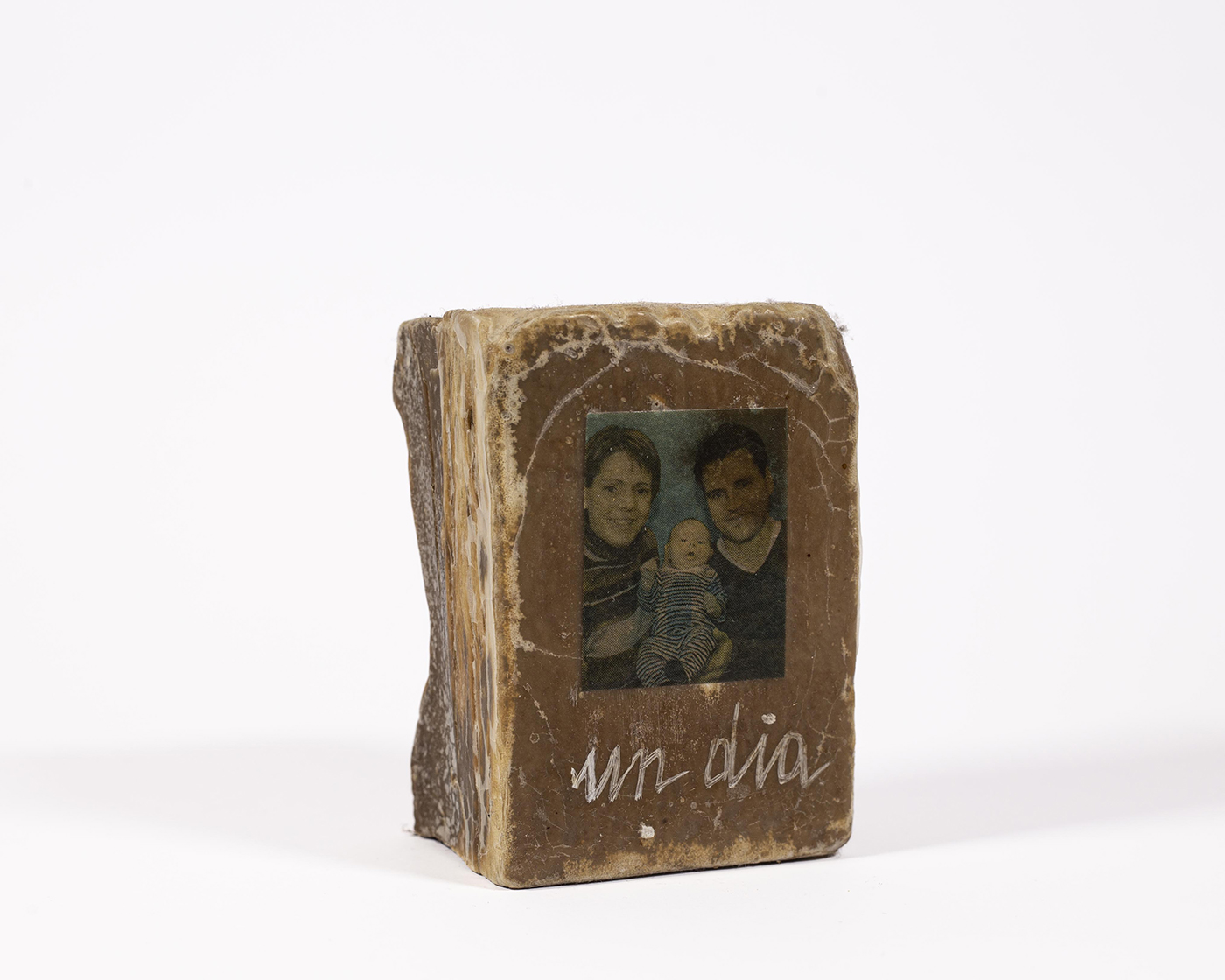
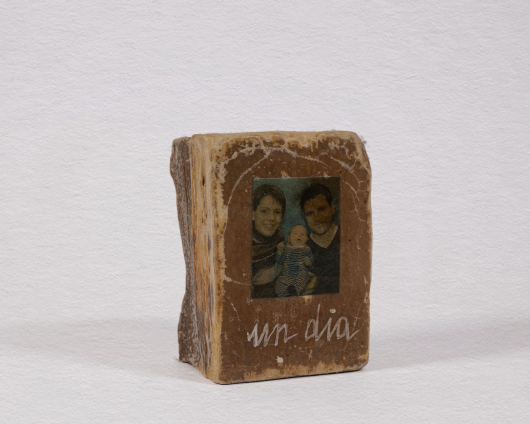
OTRO DÍA / EN ANNAN DAG is a project that includes a series of operations and occupations developed between 1999 and 2012. Castillo made audiovisual records to inhabitants of the cities of Santiago (Chile), Canary Islands (Spain) and Antofagasta (Chile), who answered the question: “what is your most important dream?”. The testimonies were recorded between the years 1999 and 2009. In 2012 Castillo carried out an occupation in the Salvador Allende Solidarity Museum, Santiago, selecting 12 testimonies that he presented together with a series of cast assemblages of plaster in wooden frames with portraits. made with tea pigment and graphite from the artist's neighbors in his home-studio in Sweden.
"Otro día" is the need to pay attention to what is discarded, to the environment of things and people; as the Tao says "a cup is as much a cup for the matter that constitutes it as for the air that surrounds it". The place that it designates is a blind angle or an empty interstice that, however, is the place of the link, there where, each time different in its encounters, life makes sense.
The work is structured from a series of interviews conducted between 1999 and 2009, in Santiago de Chile, the Canary Islands, Spain and Antofagasta Chile, selecting from these 10 who are the basis of this work. Work created for the space of the Museum of Solidarity, confronts these interviews, with icons that I have been making in my house-studio in Sweden, photographing the passing of the seasons in the foreground with wooden and plaster icons where I portray my neighbors. and their houses with you and graphite
COLLAGE SOCIAL consists of a strong idea by Juan Castillo that brings together a set of operations and objects from his body of work. In 2016 he collaborated with the Chacón Brigade, intervening in the public space of the city of Santiago. The records, along with graphic pieces, were presented at the Macchina Gallery located on the eastern campus of the Pontificia Universidad Católica de Chile, alluding in the title to a text written and published by the artist in 1982.
TRANSFUSIÓN consists of a project developed in two territories located at the geographical extremes of the planet: Saxnäs, Lappland (northern Sweden) and Castro, Chiloé (southern Chile). First, Castillo recreated in wood and on a small scale, the traditional architecture of both towns: the stilt houses of Chiloé and the kåtas of Saxnäs, on whose bases he placed fundamental texts for the cultures of each region (the book Relatos de la Conquista [The History of Chile ] and an edition of the Swedish Encyclopedia). Later, he burned the buildings recording the process. Under the remains of the burned structure of the Castillo stilt house, “they form rows of potatoes strung on sticks buried about 30 cm from the ground” (Narea, Heterogeneisis). Each potato was intervened with a bell with the phrase "From Chiloé to Grippo", making a reference to the work Analogy by the artist Víctor Grippo. The project was presented in an installation at the Chiloé Modern Art Museum.